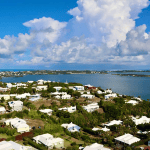
There are plenty of things we would love Bermuda to be famous for: our beaches, colorful towns, fascinating history, friendly people and seemingly endless shades of blue water. Yet mention our island almost anywhere in the world and there is a good chance somebody will eventually ask about the Bermuda Triangle.
That fascination is easy to understand. Stories of ships disappearing without warning, aircraft losing their bearings and unexplained events somewhere over the Atlantic have kept the mystery alive for generations. Behind the more imaginative Bermuda Triangle myths, however, lie real voyages, genuine tragedies, and a maritime history far more interesting than many legends suggest.
We have already looked at what the Bermuda Triangle is and why it became so famous. Its deeper history tells another side of the story, bringing together unexplained disappearances, powerful Atlantic conditions, dangerous reefs and centuries of sailors navigating waters that were once far less predictable than they are today with modern technology.

How Did the Bermuda Triangle Become a Modern Legend?
One surprising Bermuda Triangle fact is that sailors had been crossing these waters for centuries before anyone began describing them as the Bermuda Triangle. The idea of a clearly defined, mysterious region developed only in the 20th century, when writers began connecting separate disappearances across the western North Atlantic.
Even today, there is no officially recognized boundary marking where the Triangle begins or ends. It is commonly imagined as an area between Bermuda, Florida and Puerto Rico, although different writers have drawn its limits in different places. The U.S. Board on Geographic Names does not recognize the Bermuda Triangle as an official geographical name.
Rather than an established region developing a mysterious reputation over time, separate incidents were gradually grouped together until they became part of one much larger story. The legend, in other words, was largely built by looking backwards.
Bermuda also has a history that stretches far beyond the Triangle. Our Bermuda Travel Guide brings together more of the places, stories and local character that have shaped the island visitors see today.

Why Does the USS Cyclops Remain Such a Mystery?
Few stories associated with the Bermuda Triangle are as unsettling as the disappearance of the USS Cyclops. The enormous U.S. The Navy vessel was traveling from Brazil toward Baltimore during World War I when it made an unscheduled stop in Barbados in March 1918.
After leaving Barbados, the Cyclops disappeared with 306 people aboard and a cargo of manganese ore. No distress signal was received, and no confirmed wreckage has ever been found. Because the loss occurred during wartime, investigators initially considered enemy action, but subsequent investigations found no evidence that German forces were responsible.
Possible explanations include structural failure, heavy cargo, and severe weather, but the exact cause has never been established. More than a century later, the loss of the Cyclops remains one of the largest unexplained disappearances in U.S. naval history.
Its lasting place in Bermuda Triangle history comes from that uncertainty. Unlike many stories that became stranger through retelling, the central fact remains unchanged: a large naval vessel carrying hundreds of people disappeared without leaving a confirmed trace.

How Did Flight 19 Take the Mystery Into the Sky?
The legend moved from sea to air on December 5, 1945, when five U.S. Navy TBM Avenger aircraft departed Fort Lauderdale on a routine navigation training exercise over the Bahamas. Fourteen men were aboard the five aircraft, and none returned.
Radio communications suggested that the flight had become disoriented as navigation difficulties developed and weather conditions deteriorated. Communication eventually disappeared altogether. A rescue aircraft sent to search for the missing planes was also lost, though evidence suggests it likely suffered a separate catastrophic explosion or fire.
No confirmed wreckage from Flight 19 has ever been recovered. That absence of a definitive physical explanation helped make the incident one of the most frequently repeated stories connected with the Bermuda Triangle mystery.
Later accounts sometimes added supernatural details that were not part of the original record. The documented event is compelling enough without them: five military aircraft became lost over a vast area of ocean and were never conclusively found.
The story remains part of the intrigue surrounding Bermuda, although visitors will find that the Bermuda island’s cultural attractions reveal a much broader side of its history and identity.

What Do Bermuda’s Shipwrecks Tell Us About These Waters?
Not every dramatic maritime story around Bermuda involves a vessel disappearing without explanation. Our surrounding waters contain an extraordinary number of shipwrecks, many with well-understood causes.
The coral reefs encircling Bermuda help create the clear, beautiful waters visitors see today, but historically they presented a serious danger to approaching ships. Before accurate modern charts, GPS, radar and advanced weather forecasting, vessels could encounter reefs with little warning, particularly during poor visibility or rough conditions.
Storms, navigation mistakes, changing seas and hidden reefs all contributed to losses around the island. Those wrecks are part of Bermuda’s maritime heritage rather than evidence of an unexplained force somewhere beneath the Atlantic.
They also provide important context for the Triangle’s reputation. The waters around Bermuda could be demanding even for experienced sailors, and the risks were considerably greater when navigation depended on much more limited information.
Today, those same reefs are part of what makes snorkeling in Bermuda so distinctive, with clear water, coral formations and historic wreck sites creating a very different relationship with the island’s surrounding seas.

Could Atlantic Conditions Explain the Bermuda Triangle?
Explanations for the Bermuda Triangle have ranged from Atlantis and alien spacecraft to magnetic anomalies and underwater forces. In reality, hurricanes, tropical storms, strong currents, shallow waters and navigation errors offer far more credible explanations for many incidents.
The Gulf Stream can also move wreckage away from an accident site, making searches more difficult. Before modern forecasting and navigation systems, crews had far less warning when conditions changed.
That doesn’t explain every disappearance, but it shows why this part of the Atlantic can be dangerous without anything supernatural. We have also looked more closely at the most realistic Bermuda Triangle theories and the evidence behind them.
Why Are We Still Fascinated by the Bermuda Triangle?
The Bermuda Triangle endures because people are drawn to unanswered questions. Some incidents can be explained by weather, reefs or navigation, while others, such as the USS Cyclops, still have no definitive answer.
For Bermudians, though, the Atlantic is much more than a mystery. It has shaped our history, trade and coastline for centuries, and many of those places are part of our Bermuda tours.
If the Triangle first made you curious about the island, there is much more to discover once you arrive. Join a tour, plan a custom private tour of Bermuda, or contact Bermudaful Island Tours to find the right experience for your visit.